
TL;DR: Every G7 government (United States, United Kingdom, France, Germany, Italy, Japan, and Canada) runs its digital public infrastructure on JSON Schema. So do nine out of ten of the OECD’s top digital governments in the 2025 ranking. France and Italy already operate national registries that support JSON Schema, and the Netherlands is building one. From December 2026, every EU country will run mandatory digital identity infrastructure on JSON Schema, under eIDAS 2.0.
The public sector runs on APIs
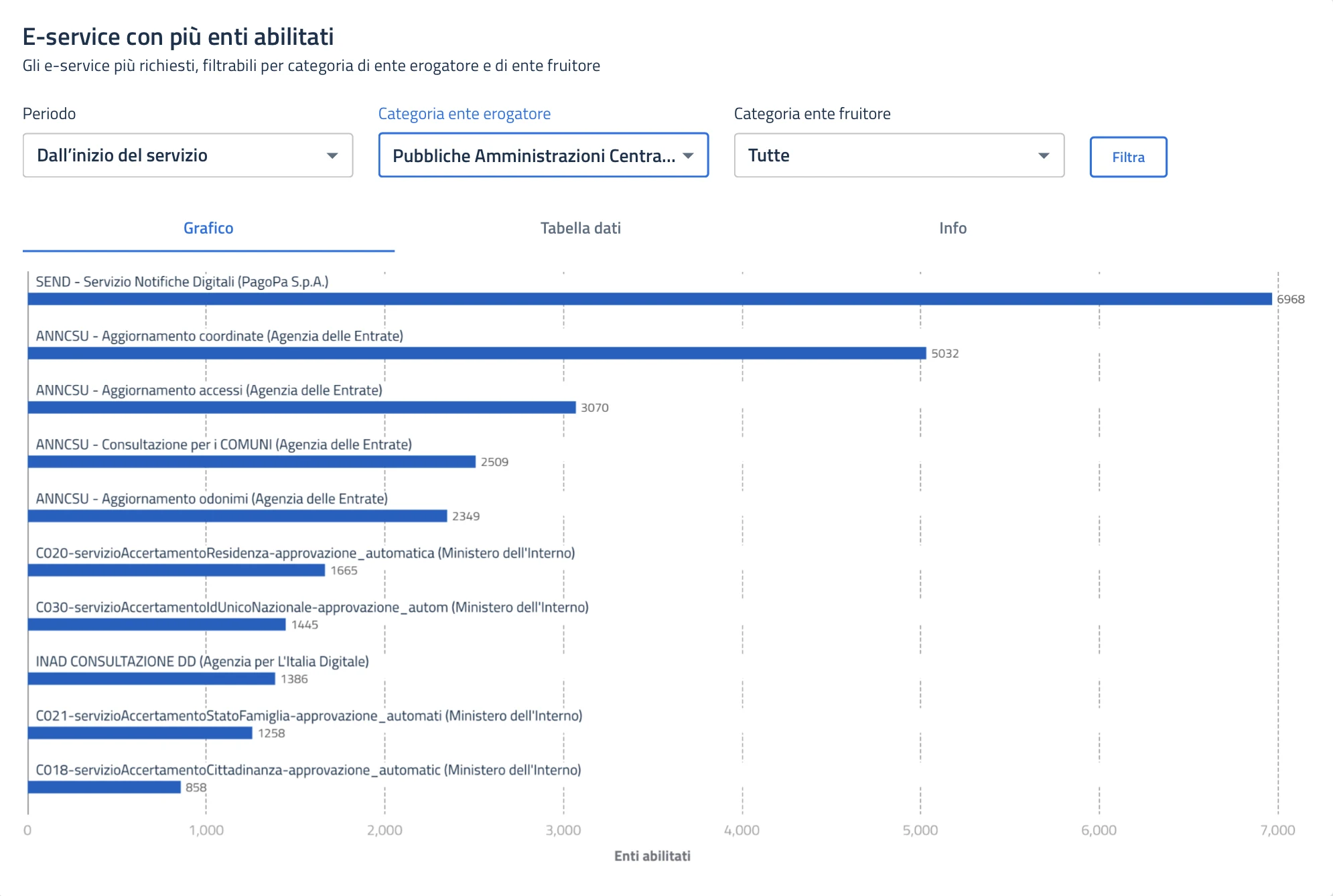
In 2015, TechCrunch declared that APIs fuel the software that’s eating the world. And as you probably know, the public sector is no exception. For example, the UK’s API Catalogue currently federates 1,791 API entries across UK public-sector publishers. The Netherlands’ national API registry currently lists 302 APIs. The community-run bund.dev portal currently indexes more than 60 German federal APIs. Italy publishes its API catalogue, which currently carries 14,672 e-services across 9,398 adhering public and private entities.
In terms of scale, Denmark’s Central Data Distribution Platform API “processes more than 70 million calls daily, and handles a daily data volume of 2.5 terabytes”. The United States data API is “used by 25 agencies for over 450 APIs”. South Korea’s data API offers “87,000 public data sets and 11,000 open APIs”. The UK Government Digital Service publishes an API exposing more than 8.4 million UK legal documents. Beyond datasets, the GOV.UK Notify API sent 12 billion messages by February 2026 on behalf of more than 11,000 public-sector services. Estonia’s X-Road API exchange links “more than 1,000 inter-connected databases covering some 1,700 services” and answers “more than 50 million enquiries every month”. In the US, the Law Enforcement Information eXchange (LInX) connects “thousands of law enforcement agencies” sharing “1.8 billion records amongst each other”.
The AI wave is only reinforcing the fact that the public sector runs on APIs. As Kin Lane puts it, “MCP is an API”, and adoption within the public sector has already started. For example, consider the US GovInfo MCP, the US Census Bureau MCP, France’s data.gouv.fr MCP, Japan’s Digital Agency jgrants-mcp-server, and the UK Government Digital Service’s Parliament MCP.
OpenAPI becomes national policy
Like the rest of the industry, the public sector has also settled on OpenAPI as the format for describing APIs in a machine-human readable way.
Many governments have explicitly written “use OpenAPI” into national API standards documents. For example, Canada mandates OpenAPI for all federal RESTful APIs. The United Kingdom’s Open Standards Board states that “Describing RESTful APIs with OpenAPI 3 is recommended by the government Open Standards Board”. Italy goes a step further: every API published on the National Digital Data Platform (PDND) is validated by “running the OAS Checker with the Italian Guidelines Full profile and obtaining 0 errors”. Japan’s Digital Agency states that “Government agencies are expected to adopt OAS […] to make development more efficient”.
The following table offers a more exhaustive summary:
| Country | Mandate or standard | Source |
|---|---|---|
| 🇨🇦 Canada | Federal RESTful API mandate | Standards on APIs |
| 🇬🇧 United Kingdom | Open Standards Board recommendation, GDS API technical and data standards guidance | gov.uk |
| 🇫🇷 France | OAS required for national API registry submissions | SEMIC 2024 |
| 🇮🇹 Italy | Zero-error PDND validation gate (AgID) | api-oas-checker-rules |
| 🇯🇵 Japan | Digital Agency DS-464-2 (Sept 2024) | DS-464-2 |
| 🇦🇺 Australia | NAPIDS MUST | api.gov.au, source repo, architecture standard |
| 🇳🇿 New Zealand | Digital.govt.nz RECOMMEND, Te Whatu Ora HISO 10108 MUST, Draft NZ API Standard v1.0 (Nov 2025) | API Guidelines, HISO 10108 |
| 🇫🇮 Finland | OpenAPI 3 required at Suomi.fi DEL | Suomi.fi DEL |
| 🇪🇪 Estonia | RIHA describes machine interfaces in OpenAPI | RIHA-Index, Tehnoloogiavalikud |
| 🇸🇬 Singapore | APEX Cloud + GovTech OpenAPI Linter as a service, GovTech recommends modern standards such as OpenAPI | apex.gov.sg |
| 🇪🇸 Spain | 2025 Practical Guide for publishing Open Data with APIs | datos.gob.es |
| 🇨🇭 Switzerland | Federal guidelines MUST | swiss/api-guidelines |
| 🇧🇪 Belgium | Belgif Federal Interoperability Framework, OpenAPI 3.0 | Belgif |
| 🇳🇱 Netherlands | API Design Rules on Forum Standaardisatie’s comply-or-explain mandatory list since 2019 | logius-standaarden |
Even beyond mandates, the European Commission found that “OAS was used by almost half of all reviewed API portals” across the European public-sector portals it surveyed.
The picture extends across borders too. X-Road, an open-source data-exchange platform that uses OpenAPI to describe its REST services, was jointly founded by Estonia, Finland, and Iceland through the Nordic Institute for Interoperability Solutions (NIIS). Estonia operates it domestically as X-tee and Finland as the Suomi.fi data exchange layer. X-Road has been adopted as the national data exchange in Cambodia (as CamDX), Japan (via PlanetCross at Nichigas), El Salvador, and Kyrgyzstan (as Tunduk).
Both OpenAPI and MCP are all about JSON Schema
We have established that public-sector API adoption runs through OpenAPI and MCP. What is easy to miss, but more consequential, is that both share the same substrate: JSON Schema.
More precisely, OpenAPI builds on top of JSON Schema. While OpenAPI offers syntax to declare endpoints and top-level metadata, what you use to actually describe request bodies, responses, headers, and query parameters is JSON Schema embedded within OpenAPI. In fact, we previously found that “in 76% of modern OpenAPI specs, JSON Schema dominates the specification”. So when governments work on OpenAPI at the scale we have just seen, they are, in the large majority, working on JSON Schema. A government OpenAPI mandate is, on closer reading, a JSON Schema mandate.
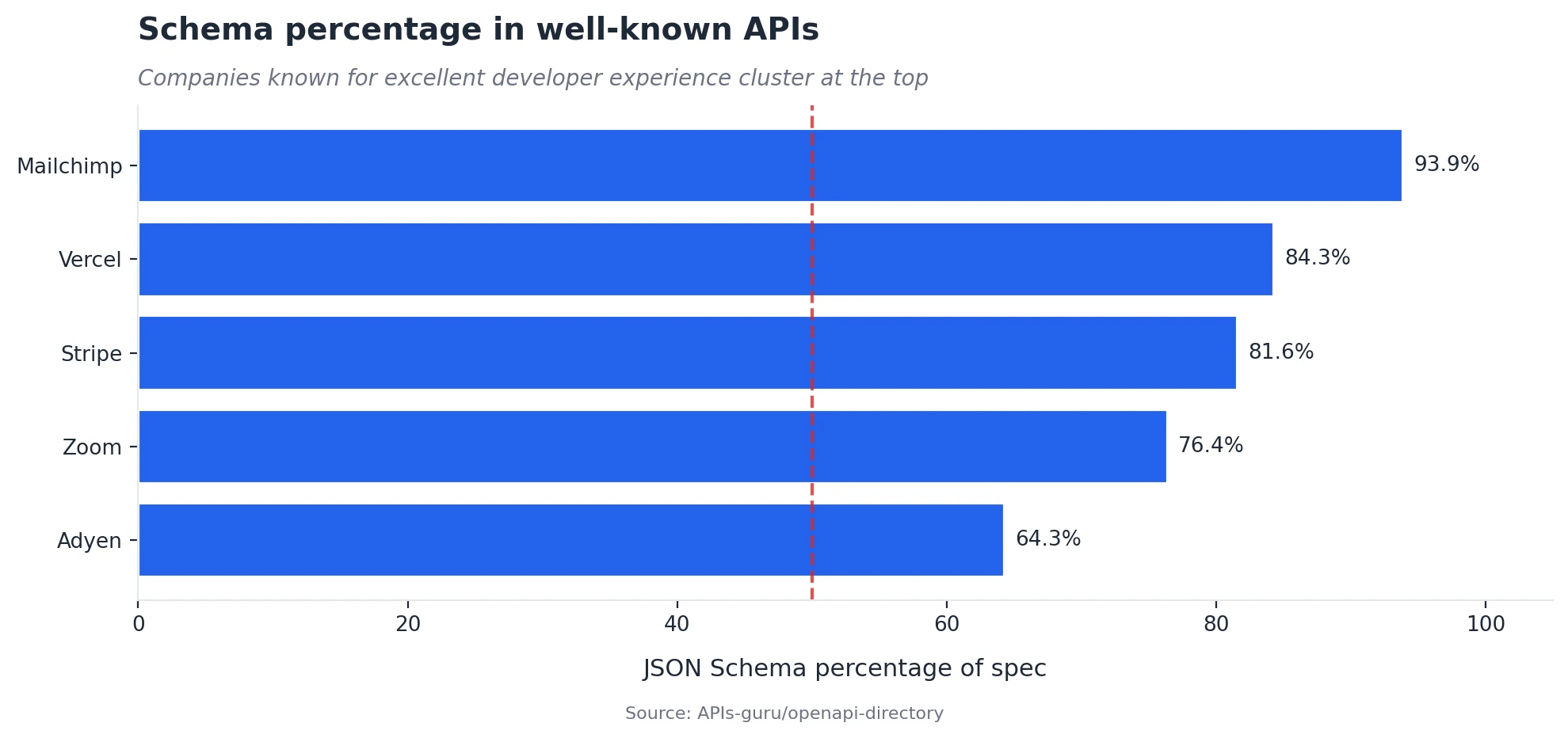
The same principle holds for MCP. The official specification is built on JSON Schema 2020-12, and every MCP tool exposes its inputs as a JSON Schema object. The pattern reaches well beyond MCP. As we previously argued, “the only schema language AI speaks is JSON Schema”. Every major LLM provider’s tool-calling interface, every AI product, and every agent framework has converged on the same substrate. As Charlie Holland puts it, JSON Schema has become “the interface definition language for AI tools”. A government MCP server is, on closer reading, a JSON Schema deployment.
We are not the only ones making this observation. When Kin Lane inventoried the API specifications stewarded by the Linux Foundation, he concluded that JSON Schema is the connective tissue across the whole catalogue: OpenAPI, AsyncAPI, CloudEvents, and others all build on it, and “JSON Schema is the substrate the other specifications are built on top of”.
Taken together, public-sector use of OpenAPI and MCP rank among the largest JSON Schema deployments in the world.
The rise of national schema registries
If OpenAPI and MCP are both about JSON Schema, it is no surprise that governments are starting to treat schemas as their own layer, separable from any particular API specification and reusable across OpenAPI, MCP, and potentially other future consumers. They operate their schemas as standalone national assets.
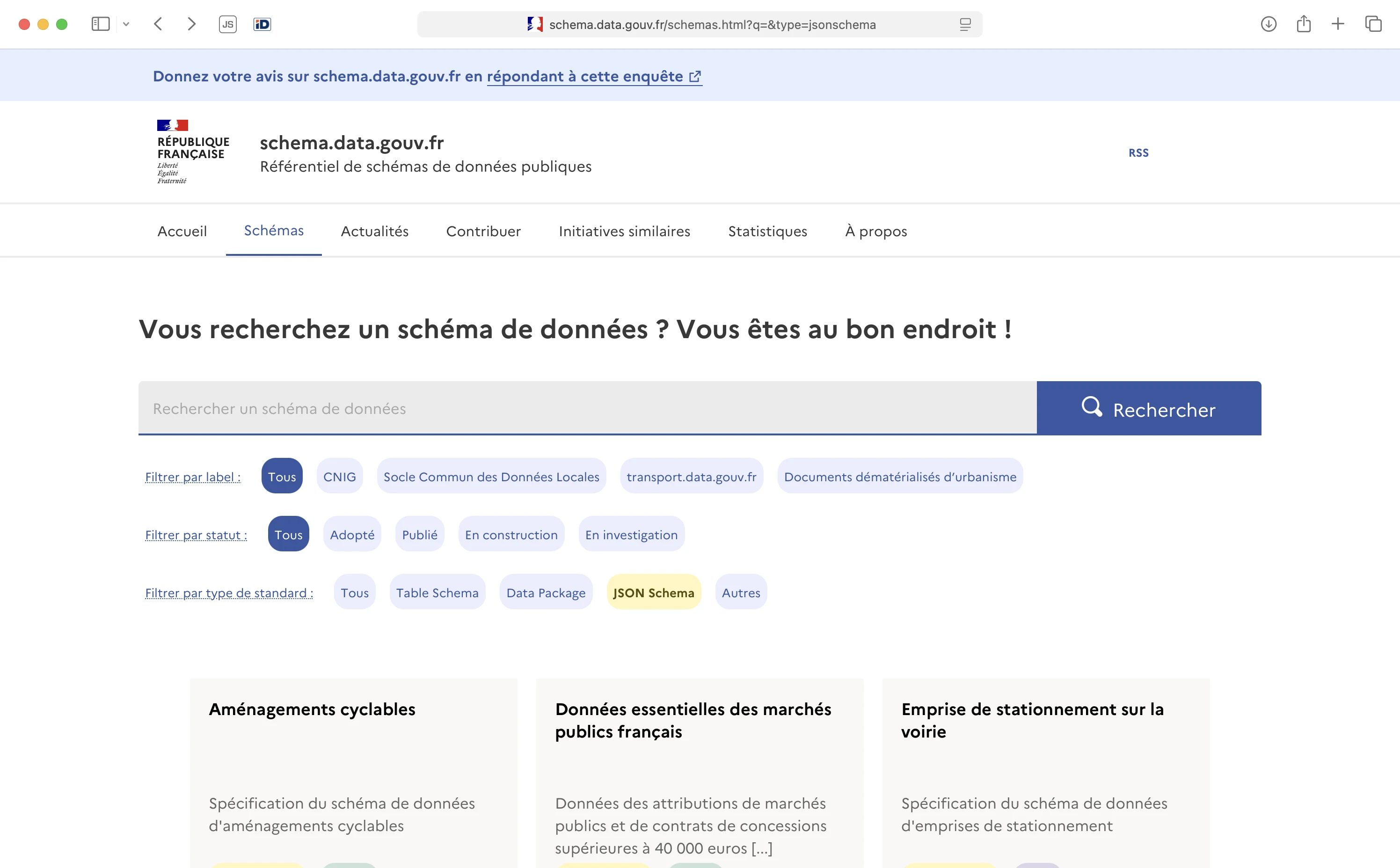
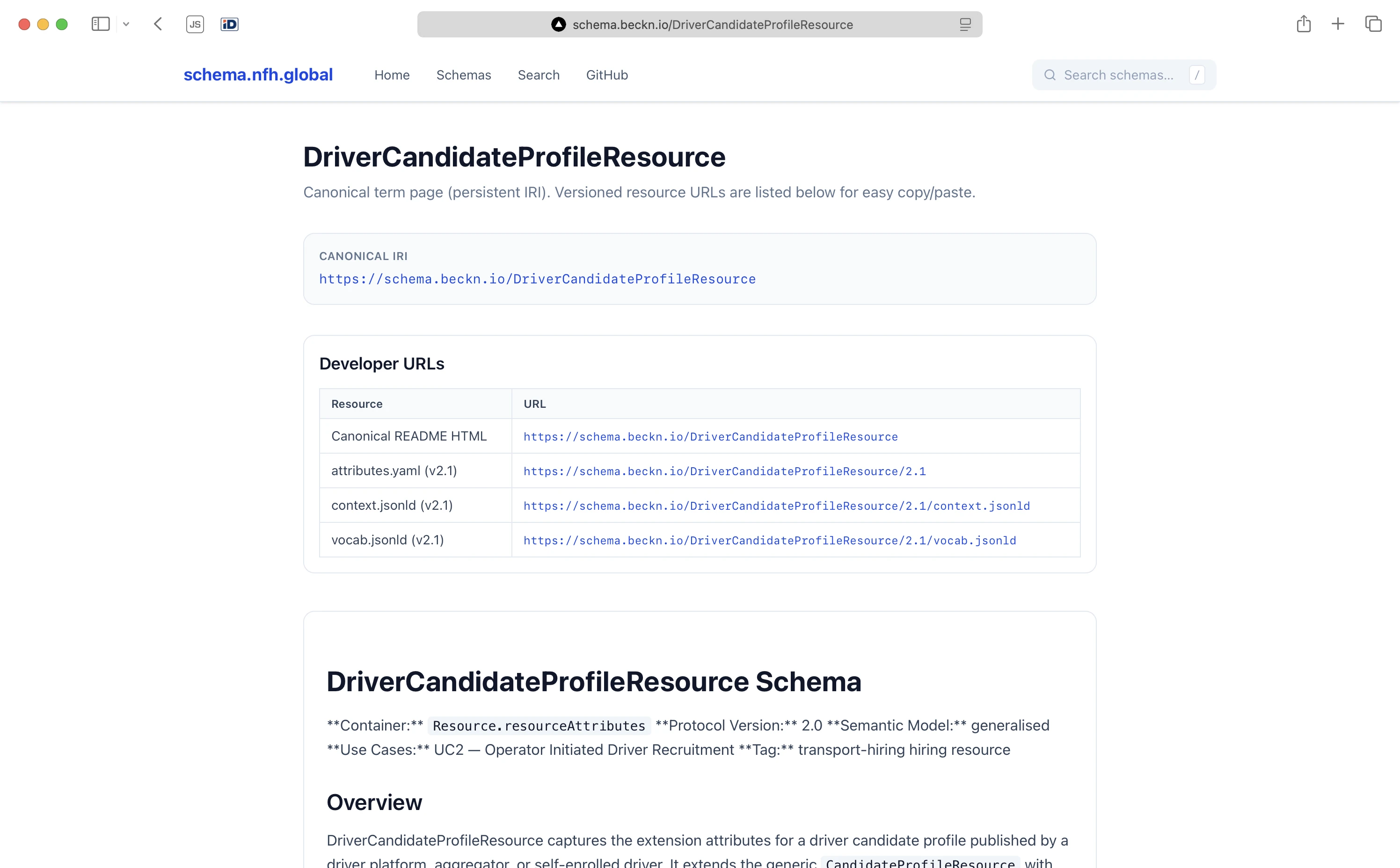
France runs schema.data.gouv.fr as a national multi-format schema registry. Among its JSON Schemas, the public procurement format maintained by the Ministry of Economy and Finance is used by every French state entity to publish all public contracts above €40,000. The data inclusion schema backs the national platform aggregating social-services data across France Travail, CAF, and local social services. And the cycling facilities format feeds the Base Nationale des Aménagements Cyclables, France’s mandatory contribution to the EU Regulation 2017/1926 multimodal-travel National Access Point at transport.data.gouv.fr.
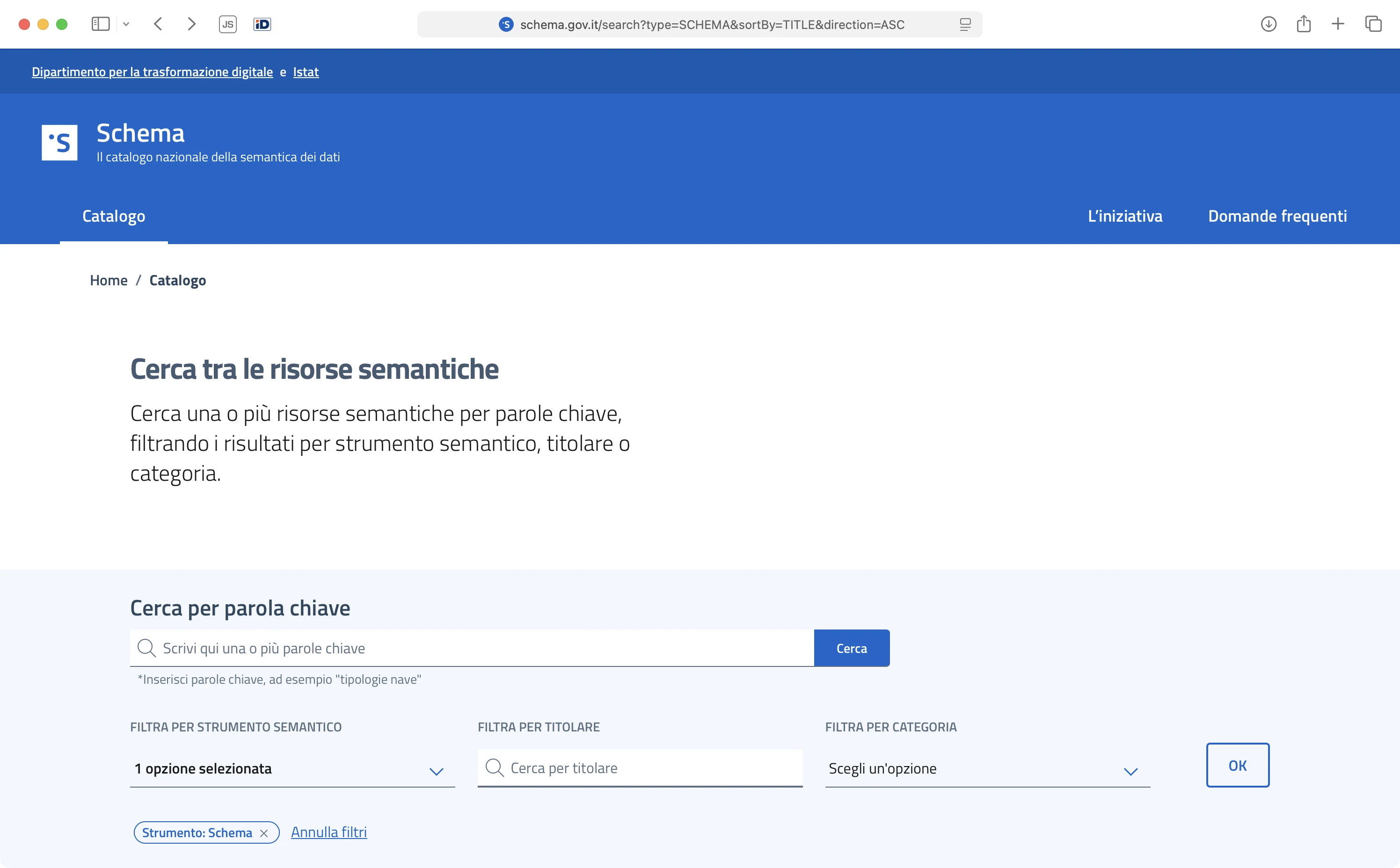
Italy runs schema.gov.it providing JSON Schemas packaged as OpenAPI components, with each schema’s properties cross-referenced to Italian government RDF ontologies. For example, the INPS National Data Catalog publishes the JSON Schemas backing core social-security workflows: NASPI unemployment-benefit applications, pension credit purchase requests, and the A1 certificate for cross-border workers under EU Regulation 883/2004. Italy is also pioneering the IETF draft REST API Linked Data Keywords, which defines two new JSON Schema keywords for embedding JSON-LD context directly into OpenAPI and JSON Schema documents.
The Netherlands announced in April
2026 that they are
building schemas.overheid.nl, a central register for reusable JSON Schemas
and OpenAPI components.
The registry pattern is not confined to the G7 or the OECD. India, whose Aadhaar and UPI made it the global reference case for digital public infrastructure, initiated ONDC, the open e-commerce network incorporated by the government in December 2021, which crossed 200 million transactions in March 2025. ONDC runs on the Beckn protocol, designed by the architects of Aadhaar and UPI themselves, and the Beckn ecosystem operates its own schema registry of over 600 schema types, offered “as a public infrastructure to enable interoperable value-exchange flows”, with each concept published as an OpenAPI 3.1 component alongside its JSON Schema 2020-12 document. The same protocol is carrying the model beyond India: the ITU’s GovStack e-marketplace building block was “adapted from Beckn protocol APIs and schema”, and Beckn-based networks are live at national scale in Gambia and Nepal.
The rise of national schema collections
One tier down, individual agencies and research bodies operate their own reusable pure JSON Schema collections, often spanning entire scientific or regulatory domains.
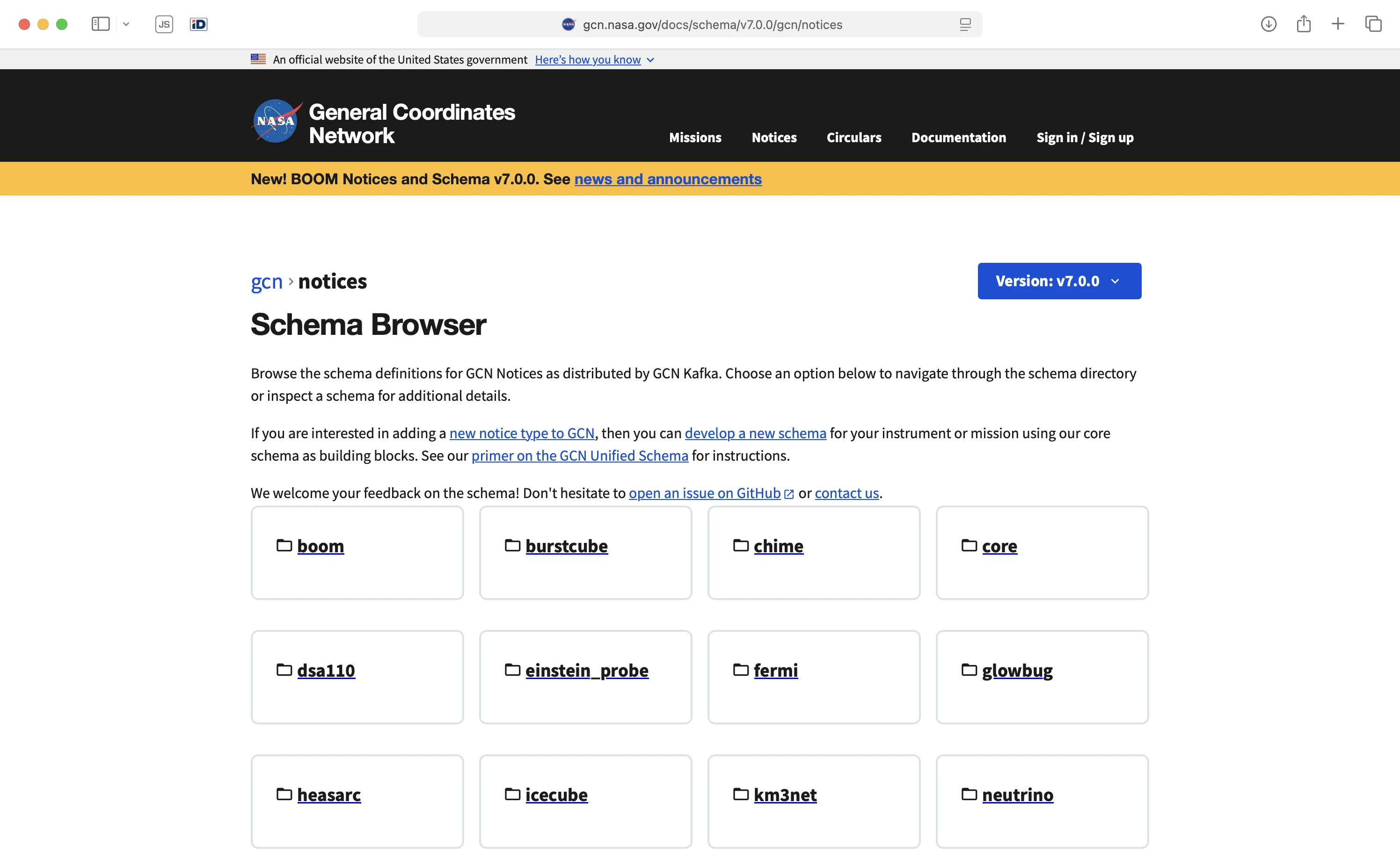
NASA uses JSON Schema across multiple missions and platforms. It publishes JSON Schemas for the General Coordinates Network alert format. When LIGO detects a gravitational wave or Swift detects a gamma-ray burst, alerts in this format go out within seconds so observatories around the world can slew toward the source while it is still visible. NASA also maintains the Common Metadata Repository (CMR), which defines the Unified Metadata Model in JSON Schema and underpins the entire EOSDIS Earth-science catalogue. Any researcher querying NASA Earthdata for satellite imagery, climate datasets, or atmospheric measurements hits records validated against this model.
NIST publishes OSCAL, the Open Security Controls Assessment Language, as the JSON-Schema-backed control language behind NIST 800-53, NIST 800-171, NIST 800-218, and CSF v2.0. Cloud providers seeking FedRAMP authorization, defense contractors handling Controlled Unclassified Information, and any organisation aligning with the US Cybersecurity Framework can now express their entire compliance posture as JSON validated against OSCAL.
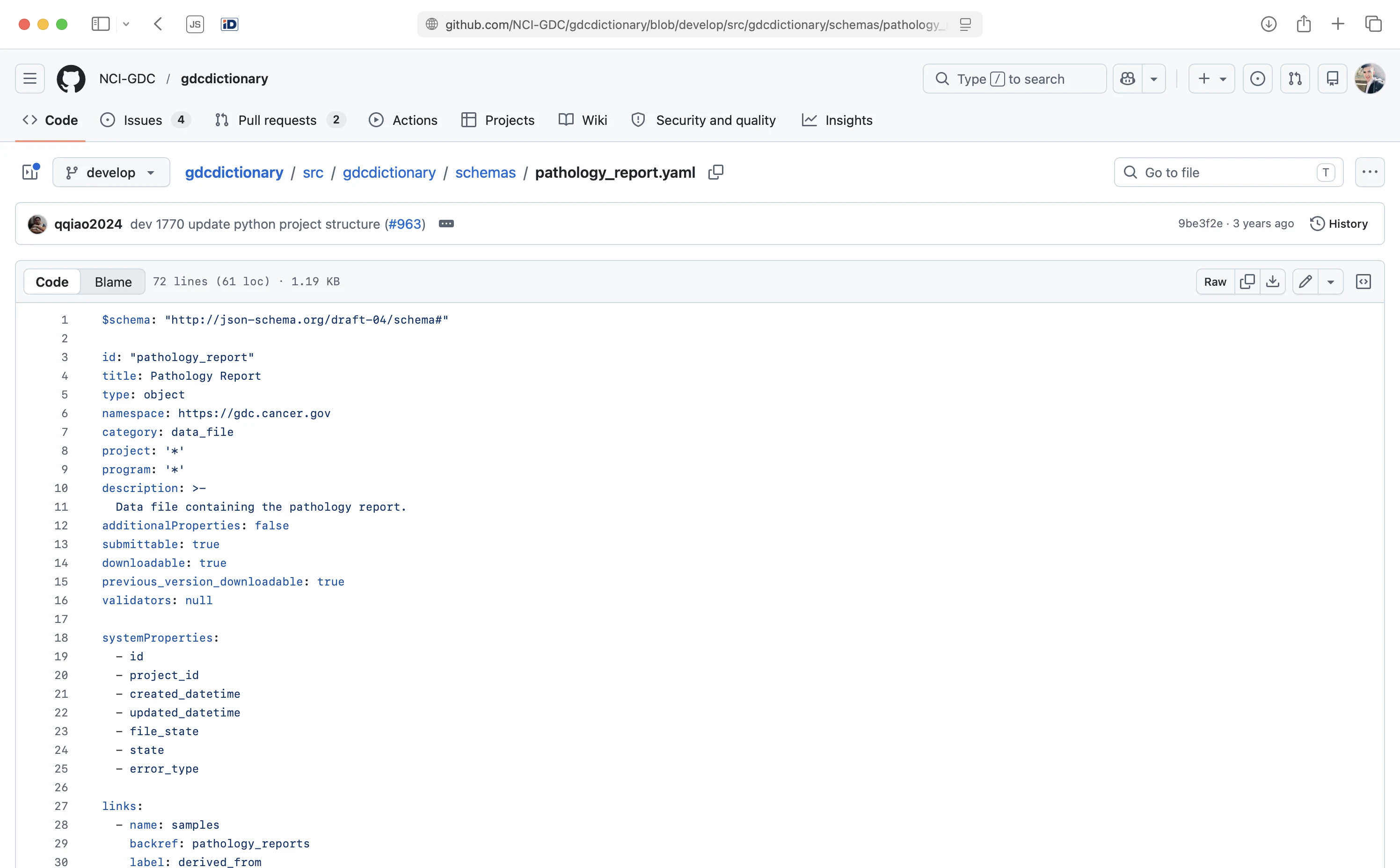
The US National Cancer Institute (part of NIH) publishes the GDC Data Dictionary, 89 JSON Schemas defining every entity in the Genomic Data Commons, the federal cancer-genomics platform pooling harmonised tumour data from across NCI programmes. Every biospecimen, patient case, sequencing aliquot, mutation call, and clinical record submitted to the GDC has to validate against one of these schemas.
The UK Atomic Energy Authority publishes fusion-research metadata schemas in JSON Schema 2020-12, covering dataset, experiment, instrument, sample, and equipment records, plus dedicated schemas for the HIVE and MRF facilities. These describe data across UKAEA’s fusion programme, including the JET tokamak, MAST-U, and the upcoming STEP prototype fusion power plant targeting grid connection in the 2040s.
The UK government uses JSON Schema across multiple departments. The Government Digital Service describes every content type published on GOV.UK as a JSON Schema through the publishing-api content schemas, 50+ formats covering case studies, consultations, detailed guides, document collections, fatality notices, and statistics, with every page validated against a JSON Schema before publishing. The Home Office maintains several JSON Schema repositories across its operational services, including booktravel_schema, which defines the contract between the Home Office’s Book Travel service and third-party escort and travel providers handling immigration removals. The Driver and Vehicle Licensing Agency (DVLA) has publicly described how it has “invested in tooling and processes that make heavy use of JSON Schema”, using it to describe its data models, generate human-friendly documentation, validate data, and code-generate Java and TypeScript representations of those models.
JSON Schema across jurisdictions
JSON Schema does not stop at national borders. When governments coordinate across jurisdictions and need to write down the shape of the data they exchange, the format they reach for is, increasingly, JSON Schema.
The most consequential example is the European Digital Identity (EUDI)
Wallet, the flagship
digital-identity initiative under eIDAS
2.0, mandatory across all 27 EU Member
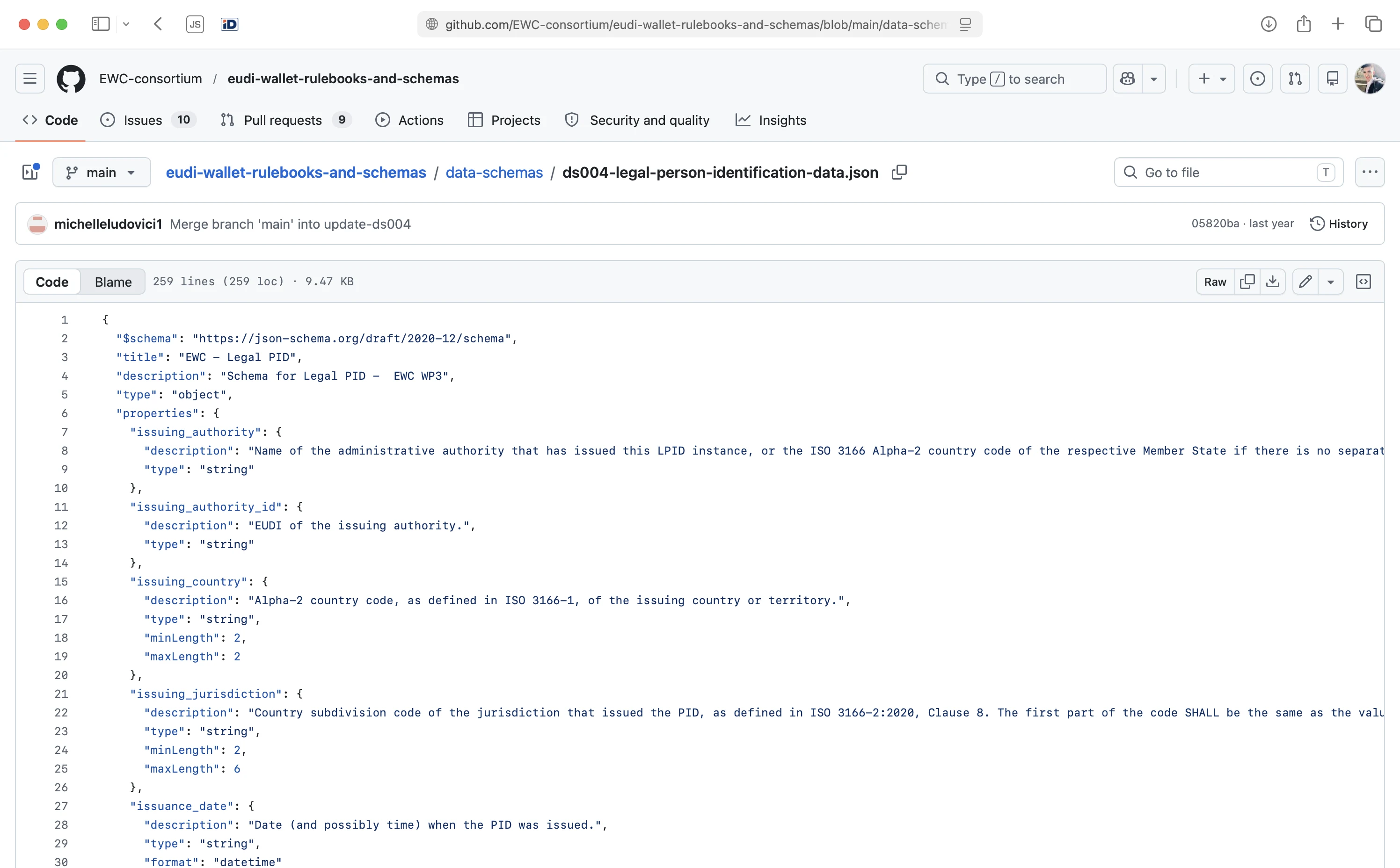
States by December 2026. Its reference data model is published by the EU Wallet
Consortium (EWC) as 14 versioned JSON
Schemas
covering the EU company certificate, IBAN attestation, signatory rights,
legal-person identification, ferry boarding pass, ultimate beneficial owners,
payment wallet, payment-data confirmation, personal contact details, student
ID, vReceipts, person identification data, photo ID, and ID-proofing ETSI
461.
The upstream W3C Verifiable Credentials Data Model
2.0, on which every national EUDI
Wallet implementation depends, defines its credentialSchema property with
JsonSchema as a type.
The pattern extends beyond the EU itself. Switzerland is not a member state and is not bound by eIDAS 2.0, yet its national e-ID, approved by referendum in September 2025, independently landed on the same substrate. The Swiss Confederation’s swiyu wallet validates every credential type-metadata schema against the official JSON Schema 2020-12 meta-schema, which it ships embedded in the app, and the DID resolver of its trust infrastructure validates DID log entries against dedicated “e-ID-conform” JSON Schemas (2020-12).
In the United States, NIEM (the National Information Exchange Model) plays an analogous role. NIEM 6.0 and the NIEMOpen Naming and Design Rules 6.0 were approved as OASIS Standards on 9 December 2025. The model harmonises “the 20,000+ data elements” used across US-government data exchanges (per the Book of NIEM 2025), with JSON Schema as its bindings vocabulary for JSON-encoded payloads. NIEM is used by the FBI, the Department of Defense, all 50 US states, and Employment and Social Development Canada (ESDC).
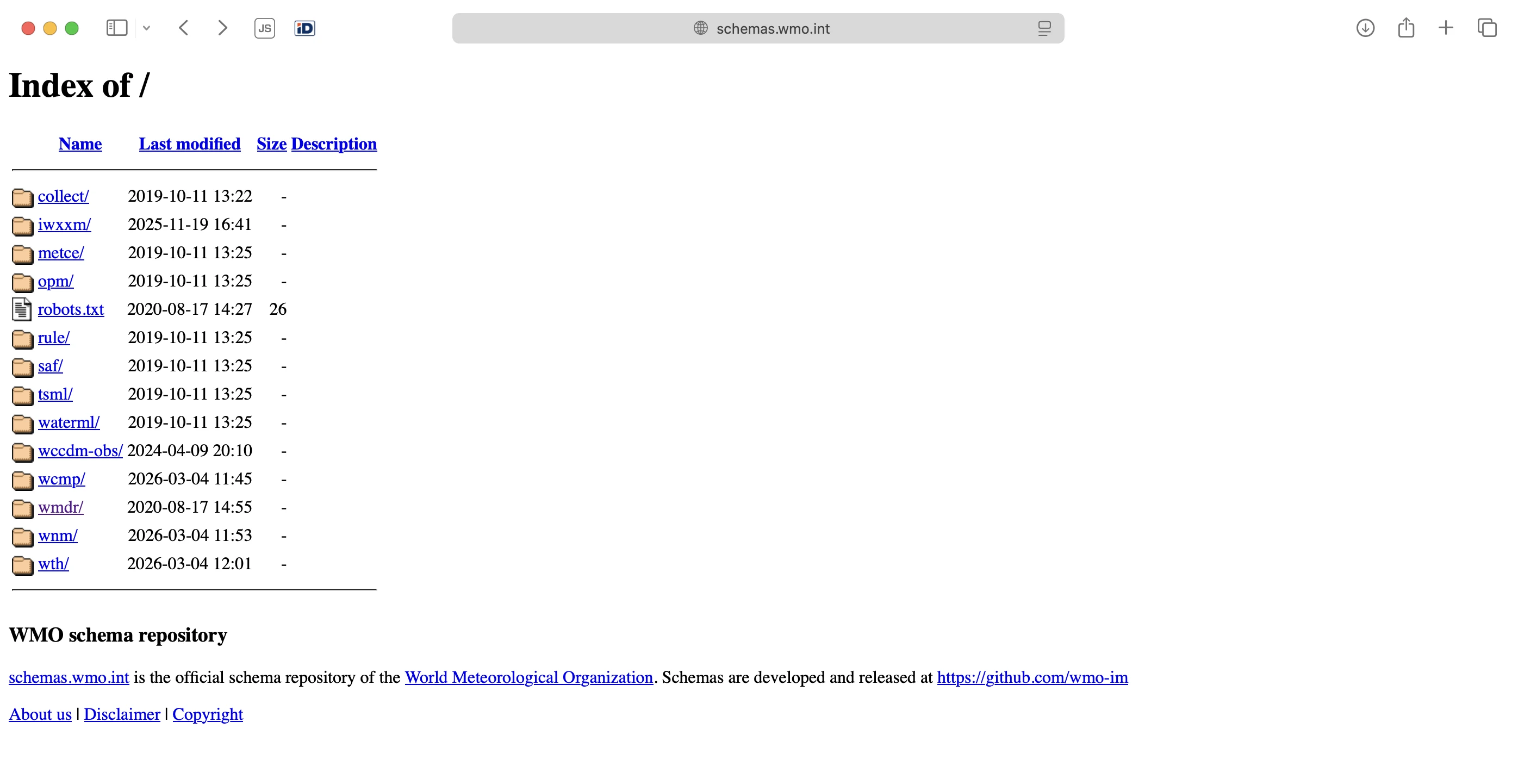
Additionally, several intergovernmental research bodies publish their own JSON Schema data models, each spanning many member states. The World Meteorological Organization, a United Nations agency with 193 member states and territories, publishes WCMP2 (Core Metadata Profile 2 v2.1.0) as the JSON Schema for weather and climate metadata, with the UK Met Office among its downstream consumers.
The audit: every G7, and nine of the OECD top ten
Across the previous sections, we have seen many governments using JSON Schema in three ways: as standalone schema collections, inside OpenAPI specifications, and inside MCP servers. Returning to the article’s premise, every G7 member has at least one piece of JSON Schema infrastructure on the public record:
| Country | Evidence |
|---|---|
| 🇺🇸 United States | api.data.gov, Code.gov metadata schema (itself a JSON Schema), NASA General Coordinates Network schemas, NASA CMR/UMM, NIST OSCAL, NCI GDC Data Dictionary, GovInfo MCP, US Census Bureau MCP, NIEM 6.0 OASIS standard with JSON Schema bindings |
| 🇬🇧 United Kingdom | UK API Catalogue, GOV.UK Notify, Open Standards Board OpenAPI 3 recommendation, GOV.UK content schemas, UKAEA fusion-research schemas, UK Home Office booktravel_schema, DVLA tooling and processes that “make heavy use of JSON Schema”, UK GDS i.AI Parliament MCP and Lex API |
| 🇫🇷 France | schema.data.gouv.fr national multi-format schema registry, data.gouv.fr MCP, #1 on the OECD OURdata 2025 index |
| 🇩🇪 Germany | bundesAPI and bund.dev community-curated catalogue documenting 60+ German federal APIs in OpenAPI. On the official side, gematik (the national health-IT body majority-owned by the Federal Ministry of Health) publishes OpenAPI specs for the e-prescription, electronic patient record, and other national health interfaces |
| 🇮🇹 Italy | api.gov.it PDND catalogue (14,672 e-services across 9,398 entities), schema.gov.it national semantic catalogue (JSON Schemas packaged as OpenAPI components), AgID OAS Checker zero-error validation gate |
| 🇯🇵 Japan | Digital Agency DS-464-2 names OAS, jgrants-mcp-server, genai-ai-api government generative AI app platform, one of the four fastest-rising scorers in OECD DGI 2025 |
| 🇨🇦 Canada | Government of Canada Standards on APIs federal OpenAPI mandate (in production, for example at api.weather.gc.ca/openapi), Employment and Social Development Canada adoption of NIEM |
The OECD Digital Government Index 2025 top ten extends the same pattern beyond the UK (4th) and France (9th). Australia (2nd) mandates OpenAPI through NAPIDS and auto-extracts JSON Schemas from OpenAPI for the Consumer Data Right. Portugal (3rd) publishes federal OpenAPI specs through amagovpt, for example doc-SAFE. Norway (5th) ships OpenAPI through Altinn Dialogporten. Estonia (6th) describes its X-tee services in OpenAPI and catalogues them at RIHA. Ireland (7th) ships the OGCIO MessagingIE OpenAPI spec. Denmark (8th) publishes the Danish Health Data Authority NCP API in OpenAPI alongside Datafordeleren. And Chile (10th) operates Mercado Público on the JSON-Schema-based Open Contracting Data Standard.
The single holdout is Korea (1st), where no public OpenAPI or JSON Schema evidence was found despite the country topping the OECD index.
Beyond the OECD top 10 digital governments, the pattern continues.
Switzerland, whose federal API guidelines already mandate
OpenAPI, is now developing the
e-government standards for its political system, covering parliamentary
operations, political actors, and public consultations (eCH-0293 through
eCH-0297), schema-first on the Federal Chancellery’s GitHub
organisation. The
eCH standards group’s stated principle is that “the
data schemata are the primary
artifacts”:
every commit regenerates the JSON Schemas, published under government
identifiers such as
https://ch.paf.link/schema/operations,
alongside RDF artifacts derived from the same sources. Sweden
coordinates the EWC
consortium
behind the EUDI Wallet’s JSON Schemas, and
Statistics Sweden ships its open-source
Balsam research platform with the
OpenAPI generator.
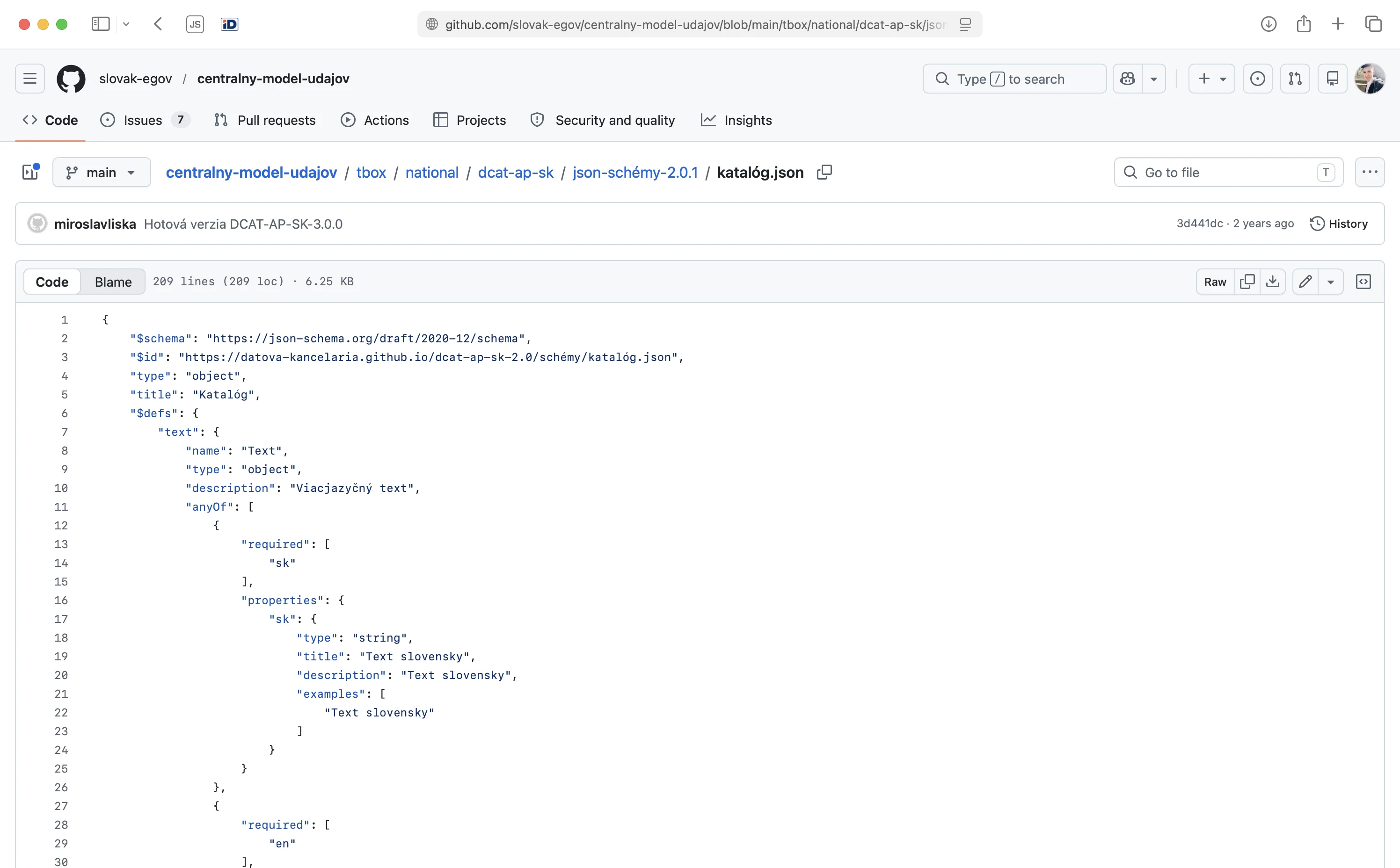
Slovakia’s slovak-egov organisation
publishes Swagger and OpenAPI specs across its national open-data
catalogue and the EU’s Once-Only Technical System pilot, alongside
national JSON Schemas for the Slovak DCAT-AP
profile. Lithuania’s
ivpk maintains national
API specifications and a
universal API in OpenAPI. Israel’s
Ministry of Health and Colombia’s
Alta Consejería TIC publish
OpenAPI specifications across their respective public-sector
portfolios.
JSON Schema is now national infrastructure
Across this article, we have seen that the G7, nine out of ten of the OECD’s top digital governments, and many others, all make use of JSON Schema. Sometimes directly, through national schema registries and cross-government data models. Sometimes indirectly, through OpenAPI specifications and MCP APIs. And this is no longer always a choice. For example, eIDAS 2.0 makes JSON Schema an EU-wide regulatory mandate.
Luke Keller, chief innovation officer at the US Census Bureau, told FedScoop: "[MCP is] not the answer. It’s one of many answers." He is right. In 2026, those answers are OpenAPI and MCP. Tomorrow, they might be something else. However, the foundational layer they all sit on is the same: JSON Schema. It is the stable substrate underneath an ever-evolving stack.
For this reason, France and Italy already operate national registries that support JSON Schema, and the Netherlands joined them as recently as April 2026. The US, the UK, and EU-wide initiatives like the EUDI Wallet continue to bet on JSON Schema as the format for the standalone data models they share across agencies, missions, and borders.
The list will only grow.